The Three O'Clock Sunset: How to Plan a Train Day Out That Still Feels Worth It
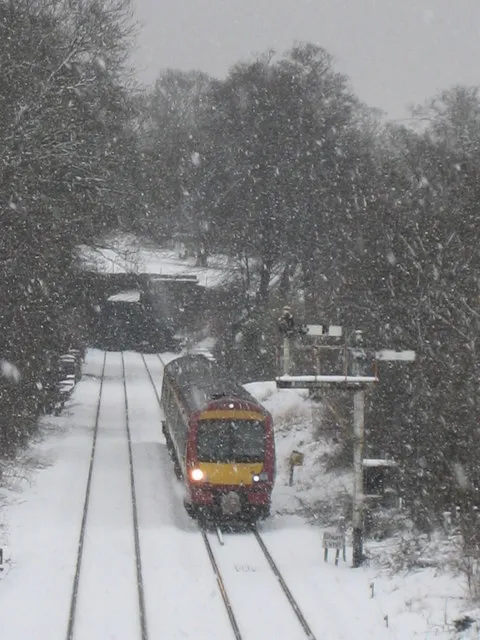
Photo: Robert Smallman, CC BY-SA 2.0, via Wikimedia Commons
I used to treat a winter train day out like a test I was destined to fail. You leave in the dark, you come back in the dark, and somewhere in between there's a frantic scramble to see something before the light gives up. By the time I'd walked from the station to the nearest museum and back, the sun had already clocked off. It felt like a waste of a ticket.
But over the last few years I've stopped fighting the early dusk and started planning around it. A three o'clock sunset isn't a disaster. It's a deadline, and a surprisingly useful one. You just have to be honest about what you can fit in.
One town, two anchors
The biggest mistake I made in the past was picking a town because it had five things I wanted to see. In summer, that's fine. In November, it's a recipe for rushing from one thing to the next and enjoying none of them. Now I look for somewhere with two things: one outdoor stretch worth a decent walk, and one warm indoor anchor worth sitting in for an hour or two.
That's it. Not four museums and a cathedral and a riverside path. Just one of each.
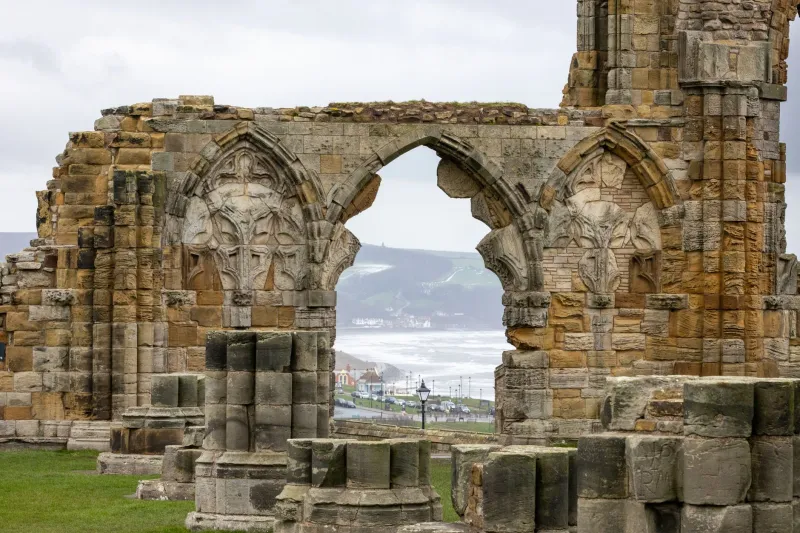
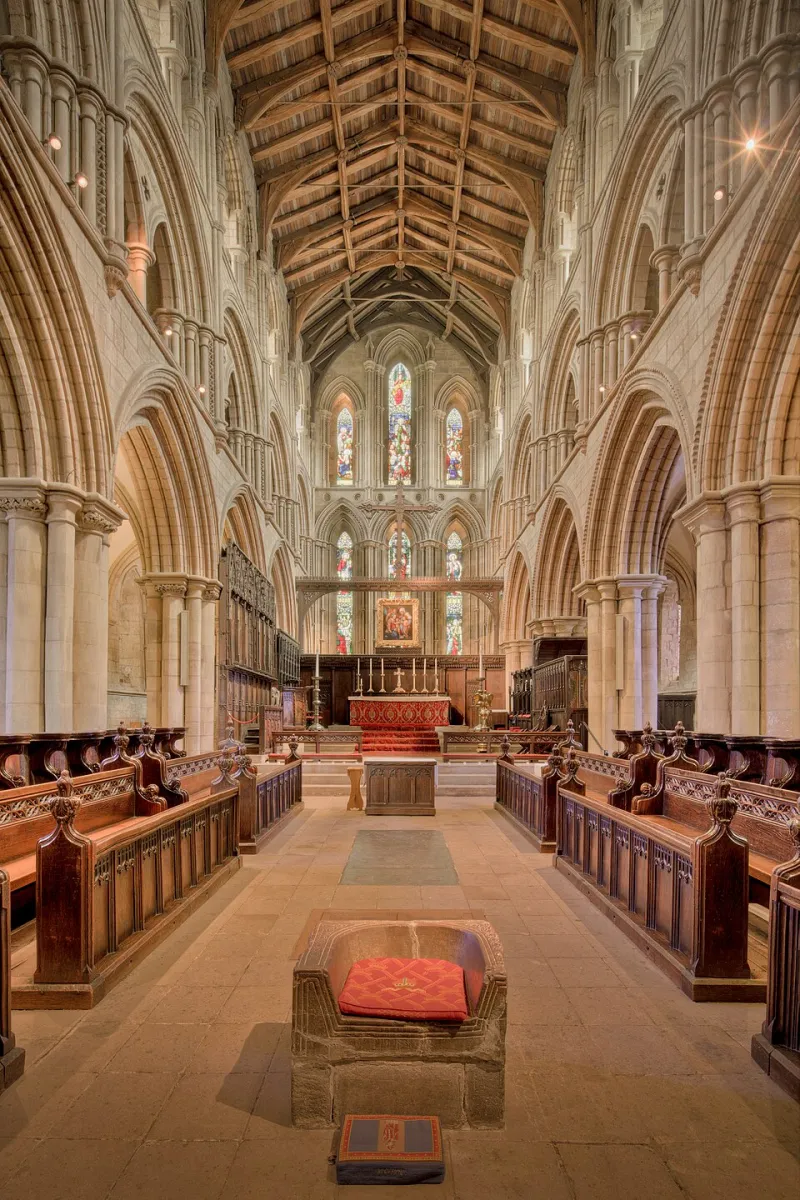
A good example from my own trips is Hexham. The outdoor stretch is the walk along the Tyne, or a loop past the abbey and down to the bridge. It takes maybe forty minutes if you don't stop, longer if you do. The indoor anchor is the abbey itself, or one of the cafes near the market place. I did that in early December a couple of years ago, and it worked because I wasn't trying to squeeze in a second walk.
Other towns that fit this pattern: Beverley (outdoor: the Westwood; indoor: the minster), Durham (outdoor: the riverbanks; indoor: the cathedral or the university museum), Shrewsbury (outdoor: the loop around the castle; indoor: the museum or a pub by the square). The names don't matter as much as the shape of the day.
Let the train times set the rhythm
I used to book the earliest train I could reasonably catch, thinking I'd get more daylight. But arriving somewhere at half eight when nothing opens until ten just means you wander around in the cold, waiting for your indoor anchor to unlock its doors. Now I aim to arrive around ten, which gives me a solid four hours of useful light before the sun starts to drop.
That might not sound like much, but four hours is plenty for one outdoor stretch and one indoor stop, with a coffee in between. The trick is not to fill every minute. If I'm at the station by half two, I've usually had enough. I'd rather sit in a warm cafe for half an hour with a book than march around a retail park because I'm scared of 'wasting' the trip.
The train home is part of the day too. I deliberately choose a return that leaves after dark, because there's something quite nice about watching the lights come on from a window seat. It feels like a proper ending, not an escape.
The outdoor stretch: short and purposeful
I don't walk ten miles in winter. I don't even walk five. The outdoor stretch is usually between thirty and sixty minutes, and it's chosen for a reason: a river path, a section of town wall, a seafront promenade, a loop around a park. Something with a clear start and finish, so I'm not tempted to keep going just because I can.
I also check the sunset time before I go. On 12 November 2026, for example, sunset in most of England is around 4:10pm, but by early December it's closer to 3:50pm. That half an hour makes a difference. I plan my outdoor stretch for the middle of the day, when the light is at its best, and I don't start anything new after 2:30pm unless it's indoors.
And I don't pretend I'm going to walk in twilight. You can, of course. But for me, the point of a day out isn't to prove I can navigate a muddy path in the half-light. It's to enjoy myself.
The indoor anchor: warm, worth sitting in
A good indoor anchor is somewhere you'd be happy to spend an hour even if it wasn't raining. A museum with a few rooms, a gallery with a bench, a cathedral with a quiet corner, a pub with a fire. It should have somewhere to sit, and ideally a toilet.
I've learned to check opening times carefully, especially in winter. Some smaller museums close at 3pm or 4pm, which is fine if you arrive at two, less fine if you arrive at half three expecting a warm hour. I also look for places with a cafe on site, because that solves the 'where do I go next' problem when the light starts to go.
If the indoor anchor is a pub, I try to pick one that's not too busy. There's nothing worse than finally escaping the cold and finding nowhere to sit with your flask and your damp coat. I usually aim for somewhere slightly off the main drag, or go early enough that I beat the after-work crowd.
Packing for the dark
This is where a few small additions make a big difference. I don't carry much extra, but I do carry three things:
- A flask. Tea or coffee, made before I leave. It saves me buying a mediocre cup just because I need somewhere warm to stand, and it means I can sit on a bench for ten minutes without my hands going numb.
- A small torch. Not a phone torch if I can help it, because that eats battery. A little keyring torch or a headtorch lives in my bag from October to March. It's for reading a timetable, finding a key, or walking the last bit of a path when the streetlights are further apart than you expected.
- Something reflective. A bag cover, an armband, a clip-on light. It's not about being paranoid; it's about being seen when you cross a road at half four and the driver's windscreen is fogged up. I use a bright yellow rain cover for my rucksack, which does the job and doubles as rain protection.
That's it. I don't add much weight, and I don't need a bigger bag. The flask is the only thing that takes up proper space, and it's worth it.
Make the dark part of the day
I've stopped thinking of the early sunset as something to beat. It's just the shape of the day. You get a bright middle, a cosy end, and a train home in the dark. That's not a failure; that's a winter day out.
The first time I really got this right was a trip to Beverley a couple of years ago. I arrived at ten, walked the Westwood for forty minutes, spent an hour in the minster, had a late lunch in a cafe, and caught the three o'clock train home. It was still light when I left the cafe, but only just. By the time the train pulled out, the streetlights were on. I didn't feel like I'd missed anything. I felt like I'd done exactly enough.
That's the standard I aim for now. Not a packed day, not a tick-box day, just a day that fits the light. If you plan for a three o'clock sunset, you stop expecting a summer day in November. And that's a much better way to travel.