Board Last, Sit Outside: Five British Ferry Crossings That Are the Whole Day Out
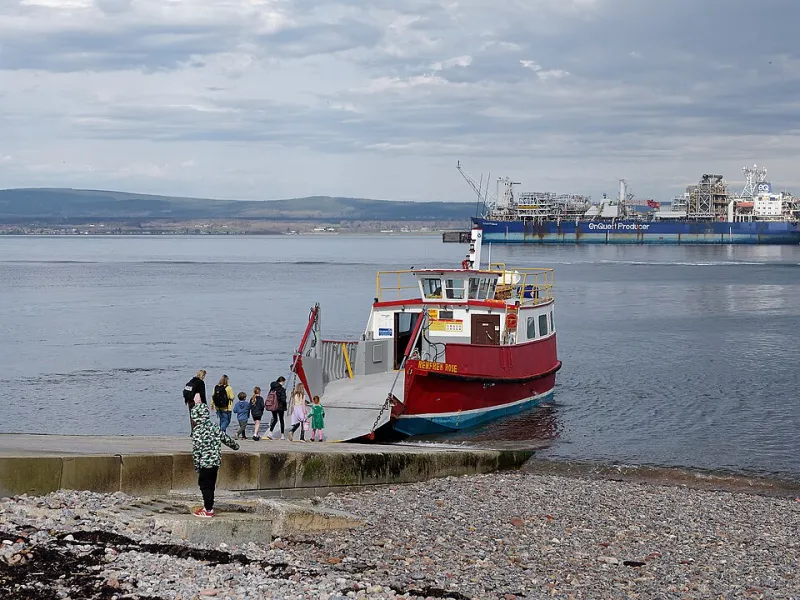
Photo: Julian Paren , CC BY-SA 2.0, via Wikimedia Commons
Some British boat journeys are transport with a view. A handful are the reason you left the house at all. The difference, almost every time, is whether you walked on or drove on.
As a foot passenger you swerve the vehicle queue, you get on with a bag and nothing else, and you stand outside in a wind that would be unbearable anywhere that wasn't a deck. You also pay a fraction of what the car in front is paying. On the short hops below, a driver and their passengers can hand over three or four times what a walk-on passenger does, and still end up in a stuffy lounge with the windows up.
Here are five crossings, ordered roughly by how long you spend at sea. Every fare mentioned is a 2026 approximation, because ferry operators shuffle their prices around like weather forecasts.
What walking on actually changes
A ferry you drive onto is a delay between two places. A ferry you walk onto is a room you happen to be in for twenty minutes: cold, noisy, occasionally spectacular, full of people eating crisps at nine in the morning.
The practical upsides are real, though. No booking needed on the short routes, no arrival window to faff about with, and no panic about deck clearance when you're reversing. The downside is that foot passengers are usually first on or last off, so build ten minutes either side into whatever you've planned. And on the longer sailings you genuinely must book — turn up at a Cairnryan check-in desk with no reservation and you'll be watching the boat leave.
1. Gosport: four minutes for about a fiver
The Gosport Ferry crosses Portsmouth Harbour in roughly the time it takes to drink a coffee badly. It runs frequently through the day, well into the evening, and needs no forward planning whatsoever. A day return is around £5.
Land at Gosport and the town centre is five minutes' walk, the Millennium Promenade is right there, and the walk out to Stokes Bay takes about an hour at a dawdle. The Explosion Museum of Naval Firepower sits at Priddy's Hard a short walk along the front. Portsmouth's Historic Dockyard is immediately opposite the other landing, which makes the whole thing feel faintly ridiculous — a UNESCO-grade waterfront on one side, a very good chip shop on the other, four minutes apart.
Honest note: this is the least romantic crossing on the list and the one I'd defend hardest. If you want to understand how a harbour town actually works, take it twice in a day.
2. Shields Ferry: seven minutes across the Tyne
The ferry between North Shields and South Shields runs roughly every half hour and costs less than £3 each way. It is the oldest crossing of its kind on the Tyne and it still feels like a commuter service that happens to be lovely.
North side: the Fish Quay is ten minutes' walk with a decent pub and a decent view, and Tynemouth is about twenty-five minutes on foot if the wind is kind. South side: the market square, Arbeia Roman Fort fifteen minutes uphill, and the long sand at Marsden if you've brought better shoes than I usually do.
Honest note: the last sailing of the day is earlier than you'd like, so do the crossing first and the Metro back. It makes a tidy loop and costs less than a round of drinks.
3. Hythe: twenty minutes, one pier tram, and a timetable that may not be on your side
The Hythe Ferry runs from Southampton Town Quay across the water to Hythe, with a pier tram at the far end that is, for reasons I can't fully explain, one of the most charming five minutes of travel in southern England. A day return is roughly £8.
At Hythe you're straight into the village, the waterfront and the marina, with a bus onward to Beaulieu if you want more. On the Southampton side, Town Quay is a fifteen-minute walk from Westquay and the main station, which makes it a realistic add-on to an ordinary Saturday.
Honest note: this service has had more than one narrow escape, and the timetable is thinner than it used to be — some weekdays and weekends run a reduced pattern, and it can be tide-dependent. Check the day before. Turn up assuming an hourly service and you may find yourself buying a second coffee out of boredom rather than joy.
4. St Mawes: twenty-five minutes and the best reason to turn straight round
From Falmouth's Custom House Quay across to St Mawes, roughly £14 return. The crossing runs on a seasonal timetable — close to hourly in summer, noticeably less so in winter — and the boat is small enough that a swell is a proper event.
St Mawes Castle is ten minutes uphill from the quay, the Place Ferry runs over to St Anthony Head from the same village, and the coast path to Portscatho is about four miles of the best walking in Cornwall. If you genuinely only have an hour, stay on the boat and go back; the harbour approach alone justifies the fare.
Honest note: this is the one crossing on the list where I'd argue for a full day rather than a whistle-stop. Take a small bag, walk to the castle, eat something with pastry in it, and come back on the last-but-one sailing.
5. Cairnryan to Belfast: the two-hour sail that is unambiguously the point
Stena Line's Cairnryan–Belfast crossing takes about two hours fifteen, and a foot passenger return sits around £35 in 2026. This is the only one on the list where you must book, and the only one where the logistics need thinking about before the day.
Cairnryan has no railway station. Stranraer is six miles away with a bus link, and foot passengers are shuttled between terminal and ship at both ends — nobody is walking onto this vessel. The reward is a proper sea crossing: a couple of hours of open water, gannets, and that specific Irish Sea light that makes everyone on deck go quiet. Belfast's terminal is a short taxi or a twenty-five-minute walk from the Cathedral Quarter.
Honest note: if you're doing it as a there-and-back day, book both legs and allow a genuine margin at each check-in. Improvising here ends with you on a bus to Stranraer wondering where it all went wrong.
The boring bits worth knowing
Walk-on fares rarely need booking on the four short routes, but always check the day before for cancellations — Hythe suffers most in weather. Foot passengers usually board early and disembark early, which is a small gift you should enjoy quietly. And a single small bag is genuinely all you need; there's no liquid limit on a ferry, only a limit on how long you're willing to stand in the wind pretending to enjoy it.
If these five aren't enough, add Wemyss Bay to Rothesay — thirty-five minutes, a Victorian station to depart from, and a pier you can walk off straight into town. But start with the four-minute one. It costs about a fiver and it will recalibrate what you think a ferry is for.