The Most Honest Room in Britain Has a Laminated Menu
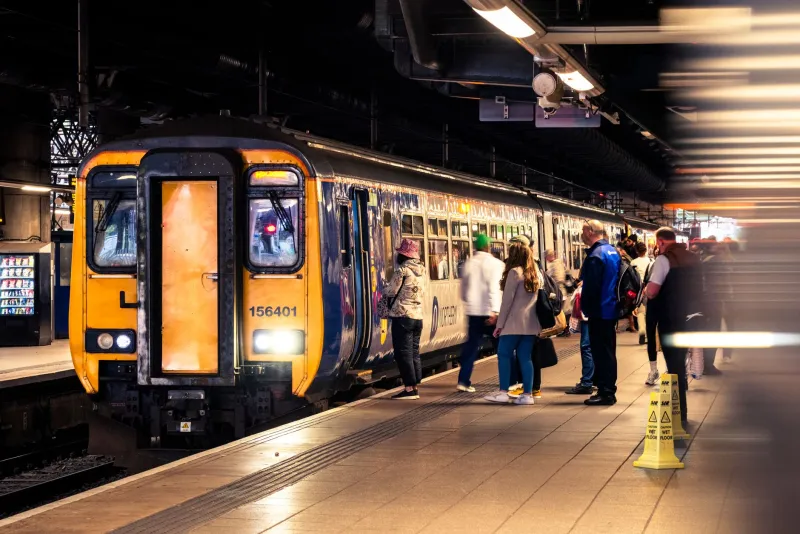
I used to treat station cafes as a last resort. Somewhere to shelter from a delay, or to buy a tea because the platform was colder than expected. Then I started noticing what actually happens in them. People spread out timetables. They ask staff which platform is really the right one. They eat toast while deciding whether to abandon Plan A. They are not lounges, and they are not trying to be. That is why I have come round to them.
A good station cafe is the most honest room in Britain. It does not pretend the journey will be glamorous. It just gives you a laminated menu, a mug and a clear view of the departure board.
The case for the unloved waiting room
Airport lounges sell a version of travel that most of us never actually experience. Station cafes sell the real thing: bad lighting, a slightly sticky table, a train that has just been shown as delayed, and a person behind the counter who knows exactly how long the bacon roll takes.
There is no dress code. No one asks why you are there. You can sit with a backpack between your feet and a map on the table, and nobody will assume you have made a wrong turn. The station cafe is a threshold room. It belongs to the journey rather than the destination, which means it is one of the few places in Britain where you are allowed to look uncertain without being treated like a problem.
And unlike the platform itself, it has chairs. This matters more as the years go on.
Where the idea clicks
I have had some of my most useful travel conversations in station cafes. At Birmingham Moor Street, with its 1930s platforms and proper sense of occasion, a mug of tea before a train out towards Stratford-upon-Avon feels like the correct start to the day. At Newcastle Central, the concourse is grand enough to make you stand up straighter, but the cafe is where you can sit down, check the bus connection and work out whether you have time for anything before the next train.
York is another one. The station is busy in a way that can feel overwhelming if you arrive without a plan. A cafe table gives you a base. You can watch the crowds, check the app, and decide whether to head straight into the city or give yourself twenty minutes to breathe. Bristol Temple Meads, with its vaulted roof and general air of Victorian seriousness, is the same: the cafe is not the destination, but it is a useful pause between the ticket barrier and the rest of your day.
I am not claiming every station cafe is a hidden gem. Some are grim. Some smell of old fryer oil and regret. But even the poor ones are honest about it. There is something reassuring about a room that has no ambition beyond getting you fed before the 14:12.
The twenty-minute rule
The trick is to use a station cafe properly, not to treat it like a destination restaurant. If you have twenty minutes and a platform to find, order like a person who wants to catch the train.
Tea is the safest bet. It arrives quickly, it costs less than a complicated coffee, and it gives you something to do while you work out whether the departure board is lying. A bacon roll or a round of toast is also sensible. Soup can work if you have a little more time, but only if you can see the platform from your table. Poached eggs are a beautiful idea and a terrible one when your train is boarding.
Ask what is quick. Staff in station cafes know exactly which items hold up the kitchen and which ones can be handed over in two minutes. If the train is already showing, ask for a takeaway cup before you sit down. It is easier to leave with a tea than to abandon a half-finished cooked breakfast and feel guilty about it for the rest of the afternoon.
A planning hub, not a waiting room
A longer connection is where the station cafe really earns its place. If you have forty minutes, buy something, sit down and use the table. Spread out the map. Check the bus times. Look at the weather radar. Charge your phone if there is a plug. Ask the staff whether the local bus stop is the one by the taxi rank or the one across the road. They usually know, and they usually tell you in fewer words than an app.
There are limits. Do not occupy a table for an hour with a single cup of tea at peak time. Do not take a phone call on speaker. Do not leave your bag on the only spare chair when the place is full. The station cafe is a shared room, and the shared bit is the point.
What to order when the platform calls
My short guide is simple. Order tea in a mug if they have mugs. Order a bacon roll if you are hungry and the train is not yet shown. Order toast if you are not. Order porridge in the morning if you want something that will not fall apart in your hand. Avoid anything that requires cutlery and a countdown. Avoid the all-day breakfast unless you have at least half an hour and no strong emotional attachment to catching your connection.
And if you only have ten minutes, buy a bottle of water and a packet of crisps, stand by the door and watch the board. There is no shame in it. The station cafe is not a test.
A small defence, not a grand claim
I am not saying station cafes are better than pubs, or tearooms, or the nice place you found down a side street. I am saying they are useful, and honest, and often overlooked. They are the rooms where trips begin properly: not with a perfect flat white and a lifestyle photoshoot, but with a tea, a timetable and a slightly sticky table.
Next time you have a connection, skip the platform huddle. Find the cafe. Buy something small. Sit down. Watch the board. It is the most British start to a journey I know.