The Last Bus Test: Why the Journey Home Should Choose Your Destination
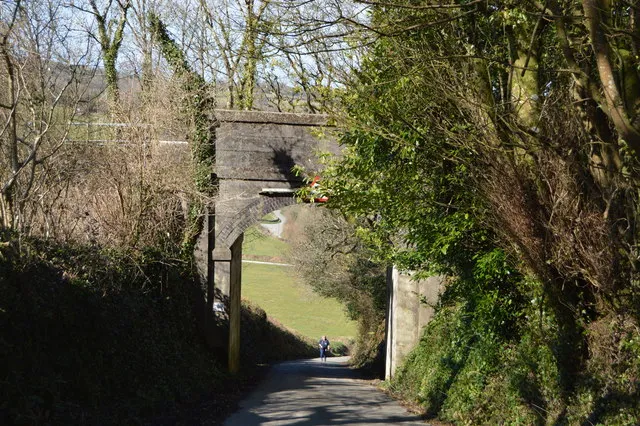
Photo: N Chadwick , CC BY-SA 2.0, via Wikimedia Commons
I have planned plenty of trips the wrong way round. I find a town that looks promising, work out the fastest train there, book it, and only then start squinting at the return options. Sometimes that works. Often it means I spend the last hour of a good day watching the clock, calculating whether one delayed connection will turn a pleasant potter into a very expensive taxi.
The outbound journey is the easy bit. It is fuelled by anticipation, a coffee and the feeling of having escaped your own kitchen. The return is the honest bit. It is where the day has to prove it can get you home without drama. I have started to think that the journey back deserves to be part of choosing the destination in the first place, not something you bolt on afterwards like a spare charger.
The bit nobody puts in the spreadsheet
When we talk about car-free travel in the UK, we tend to fetishise the outbound. The early train. The quiet platform. The clever change at a station you would never otherwise visit. All of that is lovely, but it is only half a trip. A destination is not just a place you can reach. It is a place you can leave at the right time, in the right conditions, without spending the final hour of daylight in a retail park waiting for a bus that may or may not exist.
The return leg tells you more about a place than the outbound ever can. It tells you how the town behaves after lunch. It tells you whether the station is a ten-minute walk from the seafront or a forty-minute trudge along a road with no pavement. It tells you whether the last sensible service leaves at half four or half eight, and whether that difference means you get an evening or spend it on a platform.
What the last bus test actually asks
My version of the test is simple. Imagine the trip you actually want, not the one you would advertise. If you want a late afternoon on the coast, can you still get home? If you want a second pint, does the timetable allow it? If the weather turns, is there an earlier option that does not involve begging a taxi firm in a village with one car? If the answer is no, the destination is not necessarily out. It just means you need to shorten the day, stay the night, or choose somewhere else.
This is not about being overly cautious. It is about protecting the good part of the day. A return leg with a sensible buffer lets you stop for a slice of cake without doing mental arithmetic. A return leg with no buffer turns every minor delay into a crisis. The difference between a brilliant day out and a stressful one is often not the destination at all. It is the margin you left yourself on the way home.
Places that pass the test, and why
Some places make the homeward leg feel almost boring, which is a compliment. Rye is a good example. The station is close enough to the centre that you are not committing to an expedition, and the return options via Ashford or along the coast give you room to manoeuvre. You can have a proper look round, eat something, and still feel like the day belongs to you rather than to the timetable.
The St Ives branch line is another one. Yes, it is busy and yes, you need to pay attention to the last branch train back to St Erth, but the simplicity of the return is the point. You are on a shuttle, then a mainline train. There is no heroic bus connection and no vague walk across an industrial estate. It is a joined-up journey, which is exactly what you want when you are tired and carrying a bag.
Durham is less scenic on the return, perhaps, but it is practical. The station is a walk from the centre, the trains are frequent, and you are not relying on a single evening bus to make the whole thing work. That reliability changes how you behave in the city. You linger. You take the long way round the cathedral. You do not spend the afternoon with one eye on the clock.
And the ones that quietly fail
There are plenty of places that look perfect on a screen and become a different proposition at four o'clock. The seaside town where the last bus leaves at teatime. The rural station with no shelter and a two-hour gap. The village that is lovely until you realise the only sensible return involves a connection so tight you cannot enjoy the thing you came for. None of these are disasters. They are just trips that need a different shape, or a different day, or an overnight stay.
I have learned to be suspicious of destinations that only work if everything runs perfectly. British transport does not do perfect. It does pretty good, most of the time, with occasional curveballs. A destination that can absorb a ten-minute delay is a destination that will give you a better day out. A destination that collapses at the first sign of trouble is a destination you will remember for the wrong reasons.
A short checklist before you book
First, find the last sensible service home, not the last theoretical one. The one that leaves you standing on a dark platform with no shop open does not count. Second, count backwards from that service and give yourself a buffer. Thirty minutes is a decent starting point; more if you are changing onto a bus. Third, check the walk between the thing you want to do and the station or stop. Look at it on a map at night, not just in the sunshine. Fourth, decide where you will eat before the journey home, because hungry people make bad timetable decisions. Fifth, check whether your ticket is flexible or whether you are locked into a specific train. Sixth, have a backup plan. Sometimes that is an earlier train. Sometimes it is a pub with rooms. Sometimes it is simply accepting that you will not do everything.
The trip is the round trip
I still get excited about the outbound. I still like the early platform, the coffee, the sense of a day opening up. But I have stopped pretending that the return is just the bit that gets me back to my own kettle. It is part of the trip. It is the bit that decides whether I put my bag down at home feeling like I have had a day out or feeling like I have survived a logistics exercise.
So when I am choosing where to go in Britain now, I start with the way back. Not because I am boring, but because the way back is where the good day gets to stay good. If a place can get me home with a bit of light left and a bit of margin in hand, it has already passed the test. The rest is just deciding what to do when I get there.