Speakerphone at Crewe: The Unwritten Rules That Actually Keep a Train Calm
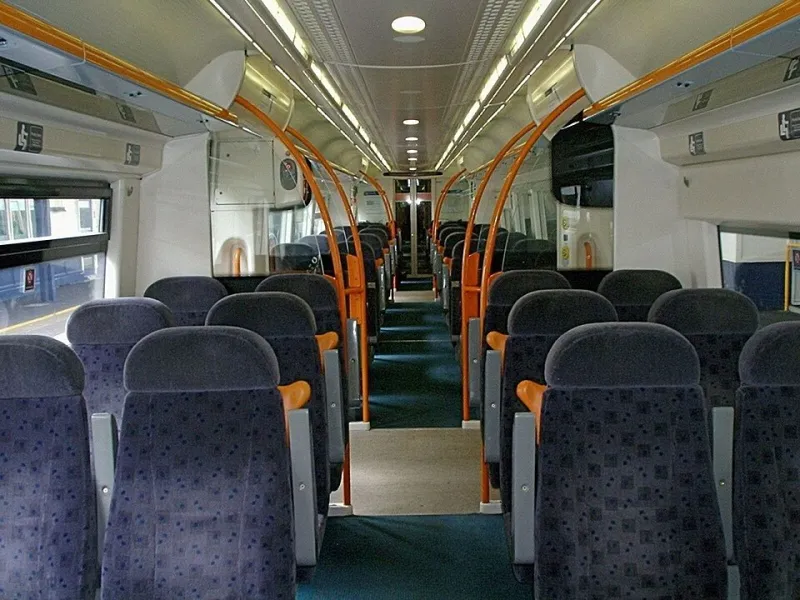
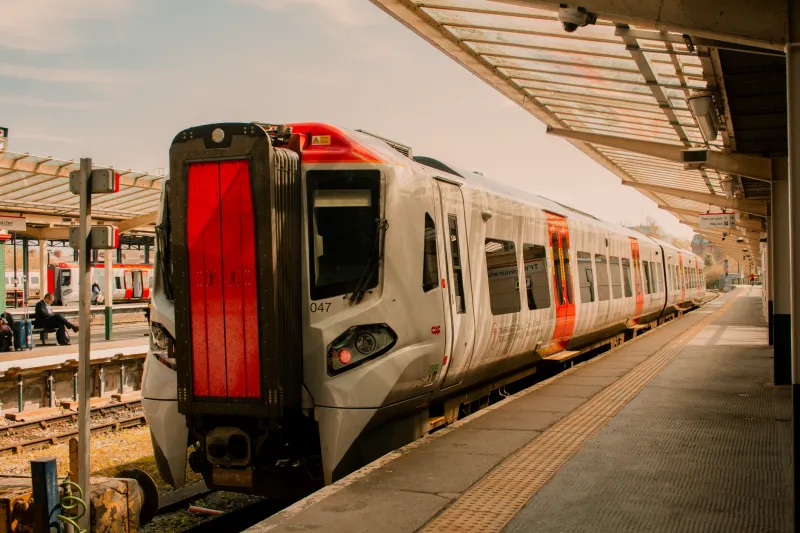
Photo: Sandpiper, Public domain, via Wikimedia Commons
I was somewhere south of Crewe, on a service that had already lost twelve minutes to something described only as "a problem," when the man opposite me put his phone on the table, face up, and began a video call on loudspeaker. Not a quick one. A full tour of his kitchen extension. Two carriages away, someone was having a similar conversation in a language I don't speak, and closer to hand a teenager was watching something with a laugh track. Nobody said anything. We all just sat there, in the officially designated Quiet Coach, quietly seething into our coffees.
That's the thing about British trains. The rules are everywhere — on the reservation cards, in the announcements, on the little stickers that say Quiet Coach in a font designed to be ignored. And then there's the other set of rules, the ones nobody prints, which govern how we actually behave in a metal tube at 125mph. After a few years of doing UK trips almost entirely by rail — Settle–Carlisle in the dark, a Norwich weekend built around one train, far too many connections at Crewe — I've come to think the unwritten rules matter more. So here's my field guide, offered without judgement. Mostly.
The reservation card is a warning, not a guarantee
There's a particular British optimism in placing a small piece of card on a seat and believing it will be respected. It won't always be. Someone will sit there anyway, look up, say "oh, sorry, I didn't see it," and then not move for two hours.
My rule: don't fight it. If the train is busy and someone's settled in, take the card with you and find another seat. If the train is half empty and someone's colonised a four-seat table with one laptop and a sense of entitlement, you're within your rights to ask. The phrase that works best is not a rule at all but a question — "sorry, is this one reserved?" — delivered pleasantly. It gives everyone an exit.
And do reserve. It costs nothing on most operators, takes ninety seconds, and turns a scramble into a plan. I book seats for every leg over an hour, even when I'm fairly sure the train will be half empty. The seat is a small certainty in an uncertain day.
The luggage rack is a shared resource, not a land grab
Watch any busy departure and you'll see the same theatre: a person boards, stops dead in the aisle, and begins a slow, public struggle with a suitcase that clearly should have gone in the hold. Behind them, forty people wait.
The etiquette here is simple and almost never followed. Put your bag up before you sit down, and if it won't go up, don't block the aisle deciding what to do about it. Move to the vestibule, let the queue pass, then solve the problem. The overhead racks on most long-distance stock will take a cabin bag; the big racks by the doors take the rest. Nothing you own needs its own seat while people are standing.
Speakerphone at Crewe, and other crimes
There is a hierarchy of train noise, and it runs roughly like this: a quiet phone call, a loud phone call, a video call on speaker, a film with no headphones, and finally, at the very top of the pyramid, a man on speaker describing his kitchen extension to a relative in another time zone while the rest of us listen to the whole thing.
Headphones are not optional. They're the price of admission to a shared carriage. If you've forgotten yours, that's a you problem, and the correct response is to watch nothing, read something, or stare out of the window like a normal person.
On calls, I'll admit I'm less strict. A short, low-voiced call — "I'm on the train, be there about six" — is fine. Anything longer belongs in the vestibule. Treat the carriage as a library with better views.
The platform sprint is pure theatre
Here's the one nobody tells you. When the train is announced late and the whole platform surges forward for a two-coach service, the people who run aren't the ones who get seats. The ones who get seats are the ones who walked briskly, ten minutes earlier, to the far end of the platform where the front coach stops.
On CrossCountry services, walk to the back. On most LNER and GWR trains, aim for coach letters furthest from the entrance stairs. On any train terminating somewhere, board at the front and get off at the front. These are small, unfashionable efficiencies, and they will save you more stress than any app.
How to protect your own quiet carriage
You can't control other people, but you can build a buffer. A few things I now do without thinking:
- Book the quiet coach deliberately, not accidentally. On most operators you can pick it at the seat-selection stage, and it fills later than the rest.
- Bring over-ear headphones, not earbuds. They're a signal as much as a solution.
- Take the window seat on a table of four where you can. It removes you from the aisle traffic and the trolley negotiations.
- Eat before you board if it's a long one. The smell of a hot pasty in a warm carriage is a war crime with extra steps.
- Have a plan for delays. A downloaded podcast, a charged power bank, and a snack turn a forty-minute hold outside Peterborough into a manageable inconvenience rather than an event.
What the calm journey actually is
None of this makes a train quiet. Trains are public spaces, and public spaces are noisy, and the person on speaker at Crewe pays the same fare as you. What these small rules buy you isn't silence — it's the sense that you know what you're doing. That you boarded early, sat down once, put your bag up, and let the day happen around you.
Which is, honestly, the whole appeal of travelling without a car. You hand over the control of the journey and keep the control of your own small corner of it. A window, a book, a seat you chose deliberately. Everything else can rattle on.