The Room That Does One Thing Well: Why a Single Gallery Beats the City Checklist
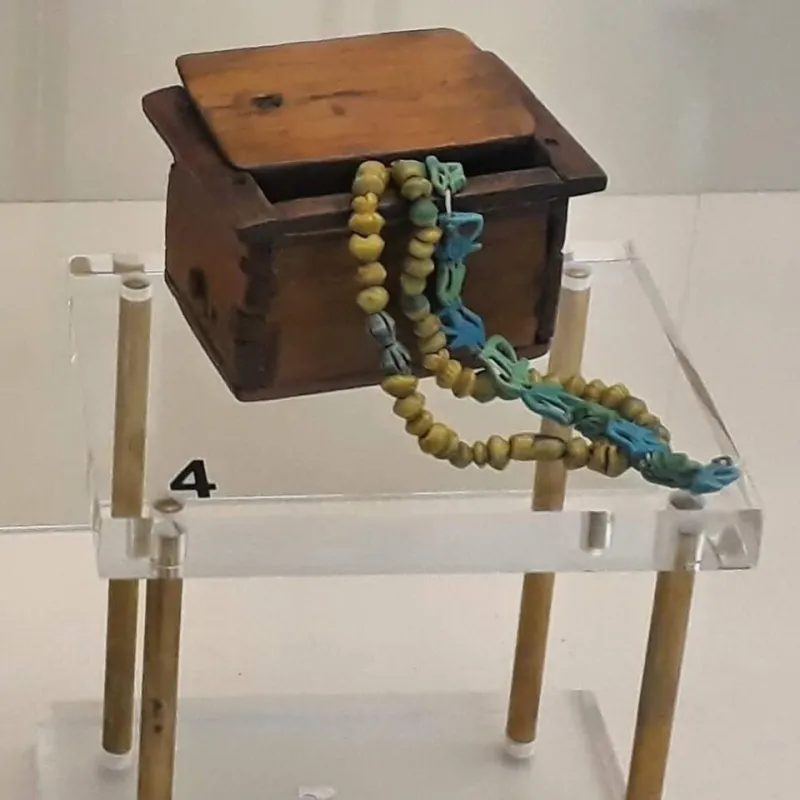
Photo: SpeakingArch, CC BY-SA 4.0, via Wikimedia Commons
There is a particular kind of tired that comes from doing museums properly, and I don't mean that as a compliment. It's the four-in-a-day tired. The sort where you stagger out of the third grand hall of porcelain, blink at daylight, and realise you couldn't name a single object you saw. I've done it in Leeds, in Cardiff, in Glasgow. It never gets better.
The fix, for me, has been to stop treating a city break like a syllabus and start treating it like a visit to one very good room. Not a museum. A room within a museum. One collection, one wall, one cabinet if that's what it takes. Then you let the rest of the day orbit around it, and the city fills in the gaps.
The checklist is a lie we tell ourselves
I understand the appeal. You've paid for the train, you've booked the room, and there's a quiet voice whispering that you must extract maximum value. So you build a list. Museum, cathedral, market, gallery, that street everyone photographs. By four o'clock you're walking past things rather than looking at them.
The trouble is that most British city museums are free, which sounds like an argument for doing more of them and is actually an argument for doing fewer. When entry costs nothing, the temptation is to treat each one as a quick stop. In practice, the free museums are often the ones with the deepest local collections, tucked away on upper floors, half-empty on a Tuesday, and entirely wasted on a twenty-minute dash.
What counts as a 'single room'
It doesn't have to be literally one room, though the best ones often are. It's a collection with a clear point of view. A room that does one thing well rather than twelve things adequately.
In Sheffield, the Graves Gallery sits quietly above the central library, free to enter, and holds a stubbornly good selection of British painting and studio ceramics. You can see it in an hour and remember what you saw. In Glasgow, the Burrell Collection reopened a few years back with its galleries breathing again, and you could spend a whole morning in one wing without feeling you've missed the point. In Cardiff, the National Museum is free, central, and the natural history galleries on the ground floor are a perfectly sized anchor for a wet afternoon.
Smaller still: the Red Lodge in Bristol, a Tudor house with a knot garden, free and usually near-silent. Chetham's Library in Manchester, which charges a small fee and asks you to book, but gives you a medieval reading room and a chair that has been sat in since the 1600s. These are rooms, not campuses.
A method you can actually use
Pick the room before you book the train. Not the city, not the hotel. Decide what you want to look at, then check it's open. This sounds obvious and it is the single most common mistake I make. Plenty of smaller UK galleries shut on Mondays and Tuesdays. Some close for lunch. A few operate on volunteer rotas. Check the website the week you travel, not the week you booked.
Give it ninety minutes and no more. A room rewards a slow pass, then a second pass. Two laps, one bench, one thing you'll describe to someone later. If you're still there after two hours, fine, but don't plan for it.
Draw a fifteen-minute walking radius. Everything else in the day should be reachable on foot from the anchor, ideally in a loop. This is where car-free travel becomes an advantage rather than a constraint. Leeds station to the Graves Gallery is a ten-minute walk. Glasgow Central to the Burrell needs a train or a bus, so make that the whole morning and pair it with a park. Cardiff Queen Street to the National Museum is eight minutes if you don't get distracted by the arcades, which you will.
Leave a hole. One unplanned hour, preferably mid-afternoon, ideally near a cafe with a window. This is where the trip actually happens. The room gives the day a spine; the hole gives it a pulse.
The obvious objection
Yes, you'll miss things. You will not see the castle, the cathedral, the famous street, and the other museum. Someone at work will ask if you went to the big one and you'll say no, and they'll look at you as if you've skipped the point of the city entirely.
But I've found the opposite happens. Choosing one room makes you notice the streets between it and the station. You walk more slowly. You read the plaques. You end up in a second-hand bookshop because you had forty minutes to kill, and that becomes the thing you talk about. The city gets a chance to be a place rather than a set of exhibits.
Practical notes before you go
Check opening hours twice, especially around bank holidays and the school half-term. Free entry doesn't always mean free exhibitions — the big touring shows still charge. Small independent museums often rely on donations, so carry a fiver. And if the room turns out to be closed when you arrive, which has happened to me more than once, have a second-choice room within walking distance. That's not a checklist. That's a backup plan.
A city break doesn't need to be comprehensive. It needs one good anchor and the sense to stop pulling at it. Pick the room. Build the day around it. Let the rest be weather and lunch.